Nox Rust Transit Coatings
Nox Rust Transit Coatings
Stock TBD
Couldn't load pickup availability
- International Delivery
- Bulk Buying Discounts
- Best-in-Class Products
Transit Coatings are either coatings, liquids, or oils. They can protect many painted surfaces and various metals during local and overseas shipping.
When sprayed correctly, the transit coating protects against damage from acid rain, seawater, bird droppings, insects, dirt, debris, smoke, and other pollutants.
Manufacturers need to protect their heavy equipment from their plant to delivery.
Metal surfaces are becoming more prone to corrosion when liquid coatings with heavy metal components are phased out. Exposure of connectors and hose fittings to corrosion-causing elements is becoming a common issue, particularly during export.
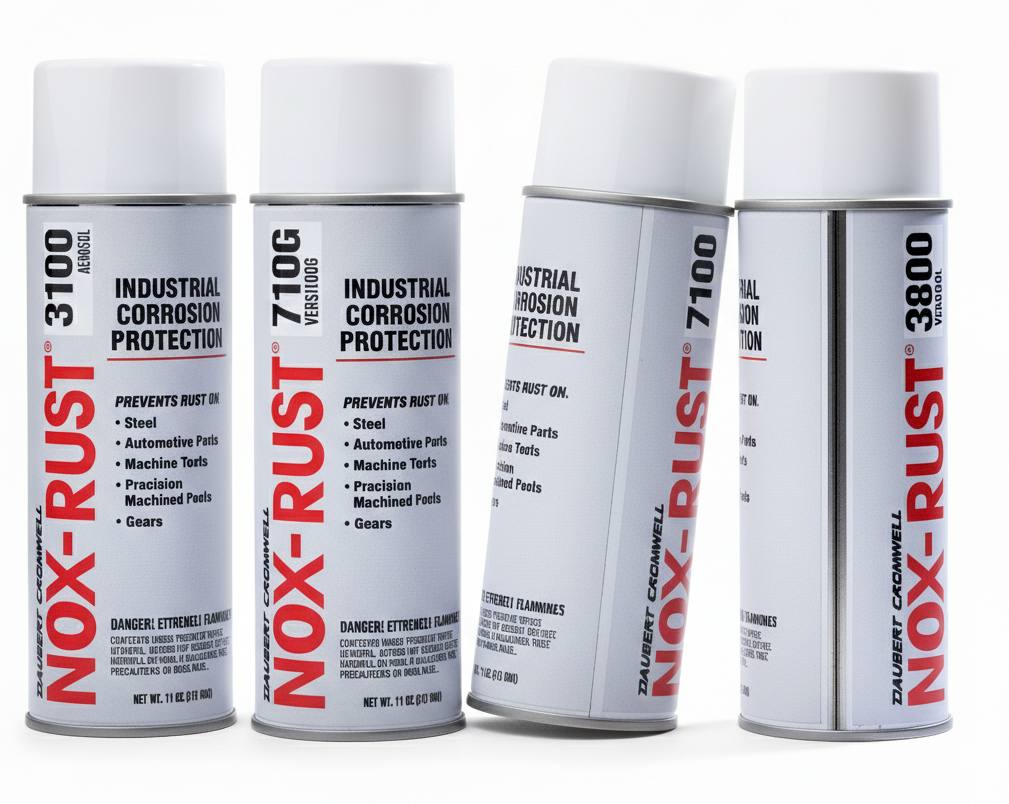
Nox - Rust 3100 Transit Coatings
Nox - Rust 3100 transit coating is your ultimate solution for safeguarding metals stored outdoors for extended periods, lasting over 5 years. It beats competitors in tough tests, proving it's the best for shielding equipment during shipments, whether local or overseas. These tests include ASTM standard, the strictest in measuring efficiency of corrosion protection coatings.
The dry film made from Nox - Rust 3100 is tough, yellowish orange in color and translucent. It shields non-ferrous & ferrous metals in any storage condition. It dries fast, ready for handling in 3-6 hours, and fully sets in 12 hours up to 24 hours. This means quick application and reliable protection.
Plus, if needed, you can remove this 3100 Nox-Rust easily using vapour degreasing, solvent-based thinners, or hot alkaline wash, offering flexibility and convenience in maintenance.
Nox - Rust 3100G
Nox-Rust3100G offers excellent rust protection just like its counterpart, Nox - Rust 3100, but it's thicker, making it stick better to vertical surfaces. This quality ensures it provides even coverage on large, heavy metal objects, especially those stored outdoors. Whether applied using a spray or brush, it forms a protective barrier ideal for equipment sheltered beneath a covering or tarp, guarding against corrosion effectively in outdoor environments.
Nox - Rust 3400
This amber coloured, wax-based film provides excellent 5-year outdoor protection. This solvent-based liquid safeguards painted surfaces during shipping, both domestically and overseas. It can be applied through dipping, spraying, or brushing methods. Removal is possible using hot alkaline wash, solvent-based thinners, or vapour degreasing.
Nox - Rust 5400
Metals Protected: sheet metal stamping; Cold-rolled or Cold-formed steel; automotive parts.
Nox - Rust 5400 is a versatile product designed to safeguard metals in industrial settings from corrosion. When used in washing, it shields the metal against rust but also coating it with a lubricating film. This enhances the lifespan of the metal components. One of its key features is its compatibility with various industrial processes; it does not disrupt priming, painting, sealing, welding, or cleaning operations, ensuring seamless workflow in manufacturing environments.
Additionally, Nox-Rust5400 offers the convenience of easy removal through conventional standard cleaning methods. This saves time and effort during maintenance. Its approval for automotive manufacturing underscores its reliability and suitability for critical applications. This corrosion protection solution is particularly beneficial for cold rolled steel, sheet metal stamping, and automotive parts production.
Nox - Rust 7100
Metals Protected: Steel; copper; brass, aluminium.
The Nox - Rust 7100 is designed to leave a sparkling shine on treated metal surfaces while effectively removing water residue from tools following the use of water-based cutting oils. It boasts a non-staining formula that ensures no unsightly marks or discolouration, and it's engineered not to clog stamping machines, which is crucial for maintaining efficient operations.
This 7100 Nox-Rust also excels at repelling water from metal surfaces, providing an added layer of protection against corrosion and rust. Upon application, it dries to form a transparent, nearly imperceptible film, preserving the aesthetic appeal of the treated metal while offering long-lasting protection.
For companies involved in the manufacture of aviation parts, gears, springs, driving shifts, machine tools, precision parts, taps, compressors, watch components, drills, refrigeration parts, or transportation components, Nox - Rust 7100 is an essential asset, especially if their operations include stamping processes utilising water-based cutting fluids.
This light and water-displacing oil not only prevents lingering cutting fluids but also ensures that stamping dies remain unclogged, thus preventing costly downtime and maintenance. Its non-staining properties make it ideal for cross or in-plant processes, where maintaining pristine surfaces is paramount.
Furthermore, the dry film left behind by Nox - Rust 7100 provides a subtle yet noticeable luster to treated metal surfaces, enhancing their visual appeal. With a protection duration of 3 up to 6 months inside a storage facility, it offers reliable, long-term safeguarding against corrosion and rust.
Nox - Rust 7800
Metals Protected: precision parts; Steel; metalworking.
This lubricant works well with precise equipment, machine, and parts. It works with barium lube grease. It's great for putting together parts.
People who know a lot about the variant 7800 say it's the best generic lubricant. Mechanics in shops use it in protecting things from rust temporarily or loosening a tough nut. It also helps keep machines working smoothly.
This 7800 Nox-Rust is a special liquid that displaces water and stops things from rusting. It's thin and works on both metal and non-metal parts when they're stored or moved with a cover. You don't need to mix it or get it ready before using it.
This liquid can move into tiny and inaccessible areas. It stays liquid even when it's very cold, like -70°F. That's why it is useful for the military people in cold places when they apply it to their guns.
This variant 7800 of Nox-Rust is useful in transportation and moving things industries, making machine parts, and doing regular maintenance. You can apply using dipping, brushing or spraying. It keeps things safe from rust for a maximum of 12 months. If you need to remove it, you can use alcohol-based liquid, a hot soapy, or high-pressure water steam.
Nox - Rust 9300
Metals Protected: Steel
This product is added to the final rinse to prevent corrosion. It slows down rust when tools, machined parts, assemblies, and treated steel are being shipped or stored. It pushes away water.
Nox-Rust var. 9300 is a useful product that helps protect against corrosion in various industrial settings. It's added during the final rinse to slow down rust when items are being shipped or stored. You can mix it with petroleum-based or water-based solvent. It's a light, see-through liquid that you can apply by dipping, spraying, or brushing. Once it dries, it forms an oily, and thin layer. This protection lasts for 3 to 9 months.
Frequently Asked Questions
• What exactly are Nox-Rust Transit Coatings, and why should I consider using them?
Nox-Rust Transit Coatings are specialised liquid corrosion preventive compounds designed to shield your metal assets, including painted surfaces, from rust and degradation during various stages of transit and storage. They're specifically formulated to provide robust protection against challenging environmental factors like humidity and salt spray, making them a crucial solution for anyone involved in domestic or international shipping, or long-term outdoor storage of equipment and machinery.
• How do these transit coatings actually work to prevent rust?
These coatings employ Daubert Cromwell's proven corrosion inhibitor chemistry. When applied, they form a protective barrier that clings firmly to metal surfaces. This barrier works by excluding moisture, oxygen, and other corrosive elements, effectively preventing rust formation. The formulation also often includes volatile corrosion inhibitors (VCIs) that create a protective vapour in enclosed spaces, safeguarding even hard-to-reach areas.
• Are there different types of Nox-Rust Transit Coatings available, or is it a one-size-fits-all solution?
Valdamark Direct offers various Nox-Rust Transit Coatings, each tailored to specific needs and levels of protection. For instance, you might find solutions like Nox-Rust 3100, which offers long-term outdoor protection, or Nox-Rust 3100G, a thicker variant designed to cling better to vertical surfaces. There are also products for different film characteristics, such as thin, non-discernible films or firm, wax-like coatings.
• Can these coatings protect both ferrous and non-ferrous metals?
Yes, a key benefit of Nox-Rust Transit Coatings is their versatility. They are specifically formulated to provide effective corrosion protection for both ferrous metals, like steel and iron, and a range of non-ferrous metals, which makes them suitable for diverse industrial applications.
• What kind of appearance can I expect after applying a Nox-Rust Transit Coating?
The appearance varies depending on the specific Nox-Rust product. Some coatings, like Nox-Rust 3100, dry to a non-tacky, amber-colored, wax-like, and semi-transparent film, while others might be light oily films or even clear and non-staining, offering a sparkling luster to treated parts. It's best to check the product details for the exact finish.
Relevant products you may want to consider:
• What makes Nox-Rust Transit Coatings stand out from general rust prevention sprays?
Unlike general rust prevention sprays, Nox-Rust Transit Coatings are engineered for heavy-duty, long-term protection, especially for goods in transit and outdoor storage. They offer superior performance in harsh conditions, such as high humidity and salt spray environments, and often feature self-healing properties, ensuring continuous protection even if the film is slightly disturbed. They are also often OEM approved, indicating their high quality and reliability in demanding industrial settings.
• What's the best way to prepare metal surfaces before applying Nox-Rust Transit Coatings?
For optimal performance, it's really important that the metal surface is clean, dry, and completely free of any existing rust, oil, or mill scale. Generally, the metal temperature should be within a specific range, typically between 10-35°C (50-95°F), at the time of application to ensure proper adhesion and curing.
• How can I apply these coatings effectively to large or complex machinery?
Nox-Rust Transit Coatings can be applied through various methods to suit different sizes and complexities of machinery. You can typically apply them by dipping smaller parts, brushing for more localised application, or using spray equipment, such as an airless spray system, for larger surfaces and machinery, ensuring an even and thorough coating.
• Is there a recommended film thickness I should aim for when applying these coatings?
Yes, for certain products like Nox-Rust 3100G, a wet film thickness of around 8-10 mils is recommended, which will typically dry down to about 3.6-4.5 mils. Applying more than 6 mils dry film thickness is generally not needed and could even be undesirable, so it’s important to follow the specific product guidelines to ensure optimal protection without excess.
• How long does it take for the coating to dry and fully cure after application?
The drying time can vary depending on the specific product, as well as ambient temperature and humidity. For many Nox-Rust coatings, you can expect them to be dry to the touch within 2-4 hours, with full curing typically taking about 24 hours. Adequate ventilation during the curing process is also really important due to solvent evaporation.
Relevant products you may want to consider:
• Can these coatings be applied to equipment that has painted surfaces?
Yes, many Nox-Rust Transit Coatings are specifically designed to be safe for use on most painted surfaces, providing robust corrosion protection without damaging existing finishes. This makes them versatile for safeguarding a wide range of assets.
• Are there any specific conditions, like temperature or humidity, that could affect the application or performance?
Absolutely, temperature and humidity can influence both application and drying times. It’s usually recommended to apply these coatings when the metal surface temperature is within a specific range, like 10-35°C (50-95°F). Extreme humidity can also extend drying times, so ensuring proper ventilation is key for effective curing.
• How long do these coatings typically provide protection for, especially in outdoor environments?
The duration of protection varies by product and exposure conditions. Some Nox-Rust coatings, like Nox-Rust 3100, are designed to protect metals stored outdoors for 5 years or more, especially if covered or in protected outdoor storage. For unprotected outdoor storage, it might be 1-3 years. Always check the specific product's technical data for precise protection times.
• Can I use these coatings for parts or equipment that will be stored long-term indoors?
Yes, Nox-Rust Transit Coatings are excellent for long-term indoor storage. While primarily designed for transit and outdoor exposure, their robust corrosion inhibiting properties ensure that valuable metal parts, dies, tools, and spares remain protected from rust and oxidation for extended periods, sometimes up to 5 years or more when stored indoors.
• Are there any specific Nox-Rust products ideal for protecting equipment during overseas shipments?
Yes, products like Nox-Rust 3100 and Nox-Rust 3100G are particularly well-suited for international shipments, including sea transport. They offer exceptional humidity and salt spray protection, which is crucial for safeguarding equipment and machinery against the harsh conditions encountered during overseas transit.
Relevant products you may want to consider:
• Can these coatings be used to protect internal components or enclosed systems?
Some Nox-Rust products, like Nox-Rust 1100, are specifically formulated as volatile corrosion inhibiting lubricating liquids for use in the preservation of ferrous metal parts in enclosed systems. They provide protection in both vapor and contact phases, reaching internal voids and cavities, making them ideal for engines, hydraulic systems, and other enclosed components.
• Do I need to reapply the coating periodically for continuous protection?
For the most part, if the coating is applied correctly and the integrity of the film remains intact, reapplication isn't typically needed until the protection period for that specific product is nearing its end or if the coating has been significantly compromised. However, for certain very demanding or long-term applications, monitoring the film and reapplying if necessary would be a good practice.
• How do I remove Nox-Rust Transit Coatings when they are no longer needed?
The removal method depends on the specific type of Nox-Rust coating. Many can be effectively removed using solvent-based thinners, vapor degreasing, hot alkaline washes, or even low-pressure steam. For fabrics, normal dry cleaning procedures are typically effective.
• Is there anything I should be careful about when removing the coating, especially from painted surfaces?
Yes, when removing the coating from painted surfaces, it’s important to avoid using chlorinated or highly aromatic solvents, as these can potentially harm the paint. Always opt for the recommended removal methods to ensure the integrity of the underlying surface.
• Do these coatings require any special maintenance once applied?
Generally, Nox-Rust Transit Coatings are quite low maintenance once applied correctly. Their self-healing properties for a certain period, often up to 90 days, help ensure continuous protection. The main consideration is to avoid physical damage to the coating, as this could expose the metal beneath.
Relevant products you may want to consider:
• Are Nox-Rust Transit Coatings compliant with environmental regulations?
Many Nox-Rust products, particularly newer formulations, are developed with environmental considerations in mind. Some are low-VOC (Volatile Organic Compound) and may be free of phosphates, heavy metals, or nitrites. For specific environmental compliance, it's best to consult the individual product's technical data sheet.
• What is the typical shelf life of an unopened container of Nox-Rust Transit Coating?
When stored correctly in their original sealed containers, in a dry location, and away from direct sunlight at recommended temperatures, many Nox-Rust coatings have a suggested shelf life of at least 12 months, and often up to 24 months or more from the date of shipping.
• Can these coatings be diluted, or should they be used as supplied?
Most Nox-Rust Transit Coatings are designed to be used as supplied, without dilution. Thinning the product incorrectly can adversely affect the film build, drying time, and overall performance and protective qualities of the coating.
• Are Nox-Rust Transit Coatings compatible with other VCI products, like VCI papers or films?
Yes, many Nox-Rust Transit Coatings are engineered to be compatible with other Daubert Cromwell corrosion inhibitor products, including VCI papers, films, and emitters. This allows for a comprehensive and synergistic approach to corrosion protection, especially in packaged environments.
• Do these coatings offer water-displacing properties?
Certain Nox-Rust products, like Nox-Rust 4101, are specifically formulated with water-displacing properties. This means they can effectively displace water and salt solutions from metal surfaces, preventing corrosion from forming, which is particularly beneficial in humid conditions or after washing.
Relevant products you may want to consider:
• Are the Nox-Rust Transit Coatings non-staining on metal surfaces?
Several Nox-Rust products are designed to be non-staining, leaving a clean appearance on the protected metal. For example, Nox-Rust 7100 is known for leaving a thin, transparent, and almost non-discernible film that is non-staining, providing a sparkling luster to treated parts.
• In which industries are Nox-Rust Transit Coatings most commonly used?
Nox-Rust Transit Coatings are widely utilised across various industries for protecting valuable assets. They are especially common in heavy equipment, automotive, aerospace, metalworking, and general manufacturing sectors, particularly for machinery, parts, and components destined for domestic or international shipment and long-term storage.
• How do these coatings contribute to cost savings for businesses?
By effectively preventing rust and corrosion, Nox-Rust Transit Coatings significantly reduce the need for costly repairs, replacements, or re-manufacturing of corroded parts. This extends the lifespan of equipment, minimises downtime, and ensures that goods arrive at their destination in pristine condition, ultimately leading to substantial cost savings and improved operational efficiency.
• Can these coatings withstand exposure to harsh environmental factors like acid fumes?
Yes, some specialized Nox-Rust coatings, such as Nox-Rust 4101, are formulated to provide protection in environments where acid fumes are present, like those found in pickling operations. This demonstrates their robust resistance to highly corrosive conditions.
• What kind of testing has been done to prove the effectiveness of Nox-Rust Transit Coatings?
Nox-Rust Transit Coatings undergo rigorous testing to validate their protective properties. Products like Nox-Rust 3100 have excelled in standard tests such as 5% Salt Spray (ASTM-B-117) and 100% Relative Humidity (ASTM-D-1748), demonstrating their superior performance in preventing corrosion even under highly challenging conditions.